Let’s cut to the chase: dry, acne-prone skin feels like a cosmic joke. You need moisture, but you’re scared of clogged pores. You want clear skin, but everything “acne-fighting” seems to peel your face like an orange. Good news—there’s a way to hydrate, heal, and keep breakouts in check without setting your barrier on fire.
Know Your Enemy: What “Dry Acne-Prone” Really Means
Dry and acne-prone sounds contradictory, but it’s common. Your skin lacks oil or water (or both), and a cranky barrier overreacts with inflammation and clogged pores. So you get flakes and zits—love that for us.
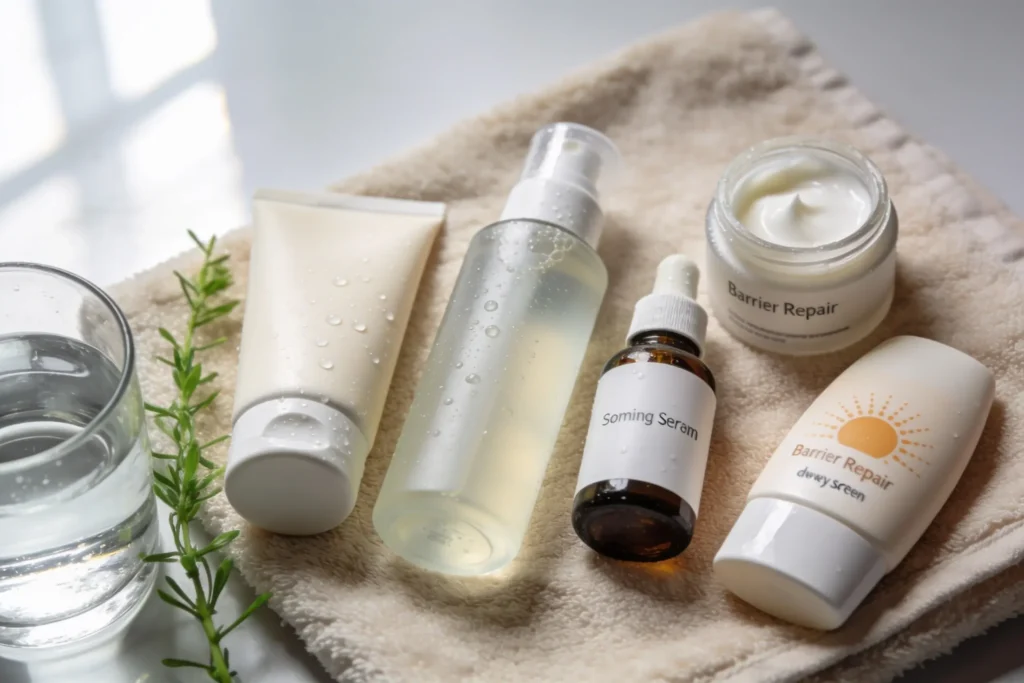
The fix? Strengthen your barrier, hydrate like crazy, and use gentle acne actives that won’t strip. Translation: fewer harsh toners, more soothing layers.
Signs You’re In The Club
- Flaking around breakouts or tightness after washing
- Small, stubborn bumps (closed comedones) + occasional inflamed pimples
- Stinging with “strong” products and foaming cleansers
- Makeup looks patchy or clings to dry spots
Morning Routine: Hydrate, Soothe, Protect
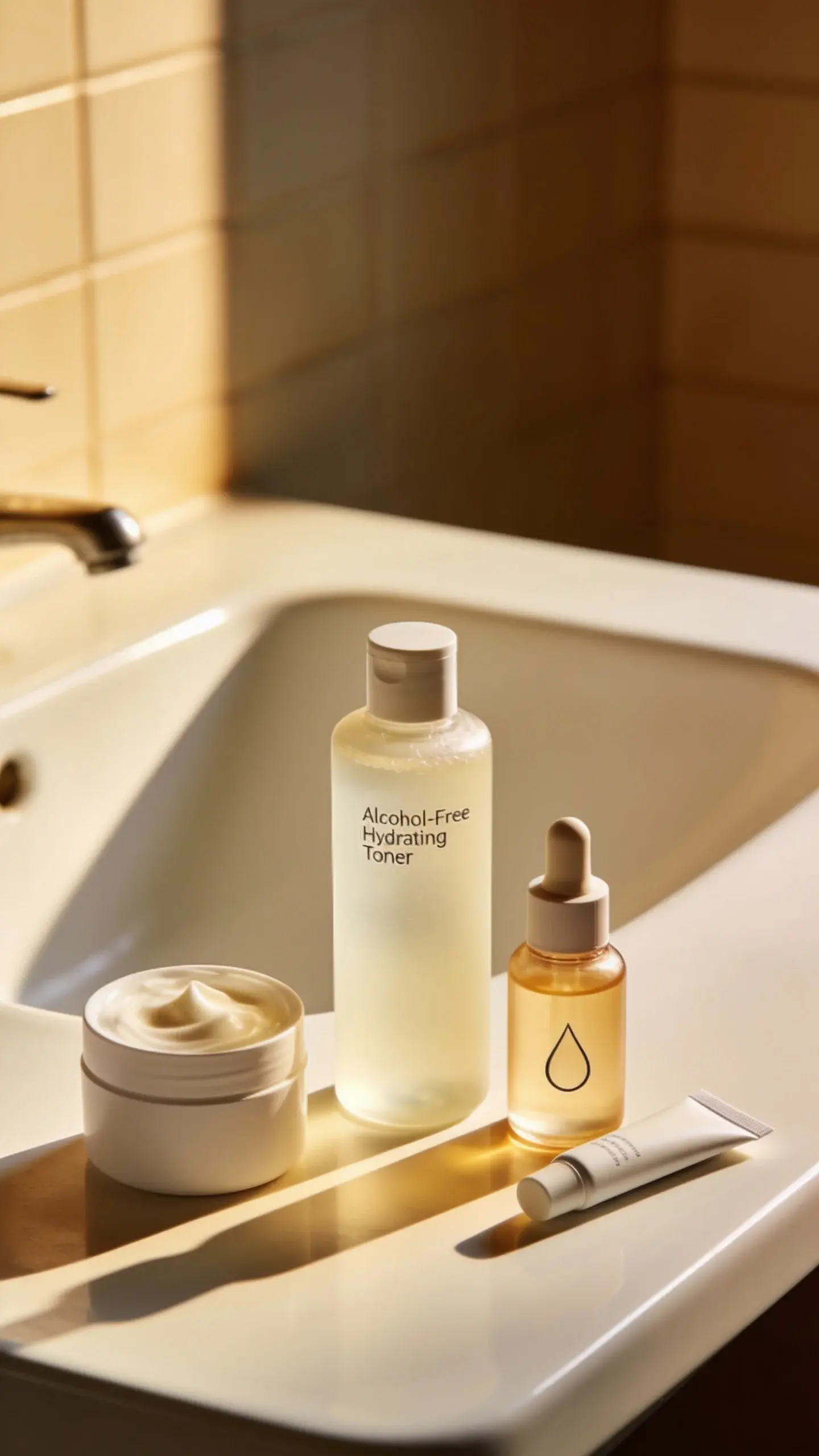
Keep mornings simple. You want hydration and sunscreen, with gentle acne support sprinkled in.
- Non-Stripping Cleanse (Optional): If you wake up clean, just rinse with lukewarm water. If you need a wash, use a creamy, low-foam cleanser labeled “for dry/sensitive.”
- Hydrating Toner/Essence: Think glycerin, hyaluronic acid, panthenol, aloe, beta-glucan. Pat in 1–2 layers for a juicy base.
- Lightweight Serum: Choose one:
- Niacinamide (2–5%): Calms redness, supports barrier, moderates oil—gentle hero.
- Azelaic Acid (10%): Targets acne + redness + dark marks. Great for sensitive skin.
- Moisturizer: Gel-cream or light cream with ceramides, squalane, or cholesterol. No heavy fragrances. If you feel tight after 20 minutes, it’s too light.
- Sunscreen (Non-Negotiable): SPF 30+ every day. Try mineral (zinc) if you’re sensitive, or a modern hybrid if you want less cast. Reapply if you’ll be outside.
Pro Tip
If sunscreen pills, let moisturizer fully absorb, use less product, and consider a sunscreen that already feels like a moisturizer. IMO, a good sunscreen is 50% of glow.
Night Routine: Cleanse, Treat, Rebuild
At night, you clear the gunk and repair your barrier. This is where your gentle actives live.
- Double Cleanse (If You Wear SPF/Makeup):
- Step 1: Oil or balm cleanser to melt sunscreen/makeup. Massage 30–60 seconds, emulsify, rinse.
- Step 2: Creamy, low-foam cleanser to finish. No squeaky clean feeling allowed.
- Hydrating Layers: Reapply your toner/essence. Add a hydrating serum (hyaluronic acid + peptides or panthenol).
- Treatment Nights (2–4x/week): Choose one lane:
- Retinal or Retinol: Start 1–2x/week. Sandwich with moisturizer (moisturizer → retinoid → moisturizer) to reduce irritation.
- Azelaic Acid: On off-nights from retinoids, or even nightly if you tolerate it well.
- Very Gentle Exfoliation: PHA or low % lactic acid 1x/week. Skip if you’re peeling.
- Barrier-First Moisturizer: Ceramides + cholesterol + fatty acids. A pea of petrolatum or a balm as a final thin layer over cheeks if you’re super dry (avoid slathering over active breakouts).
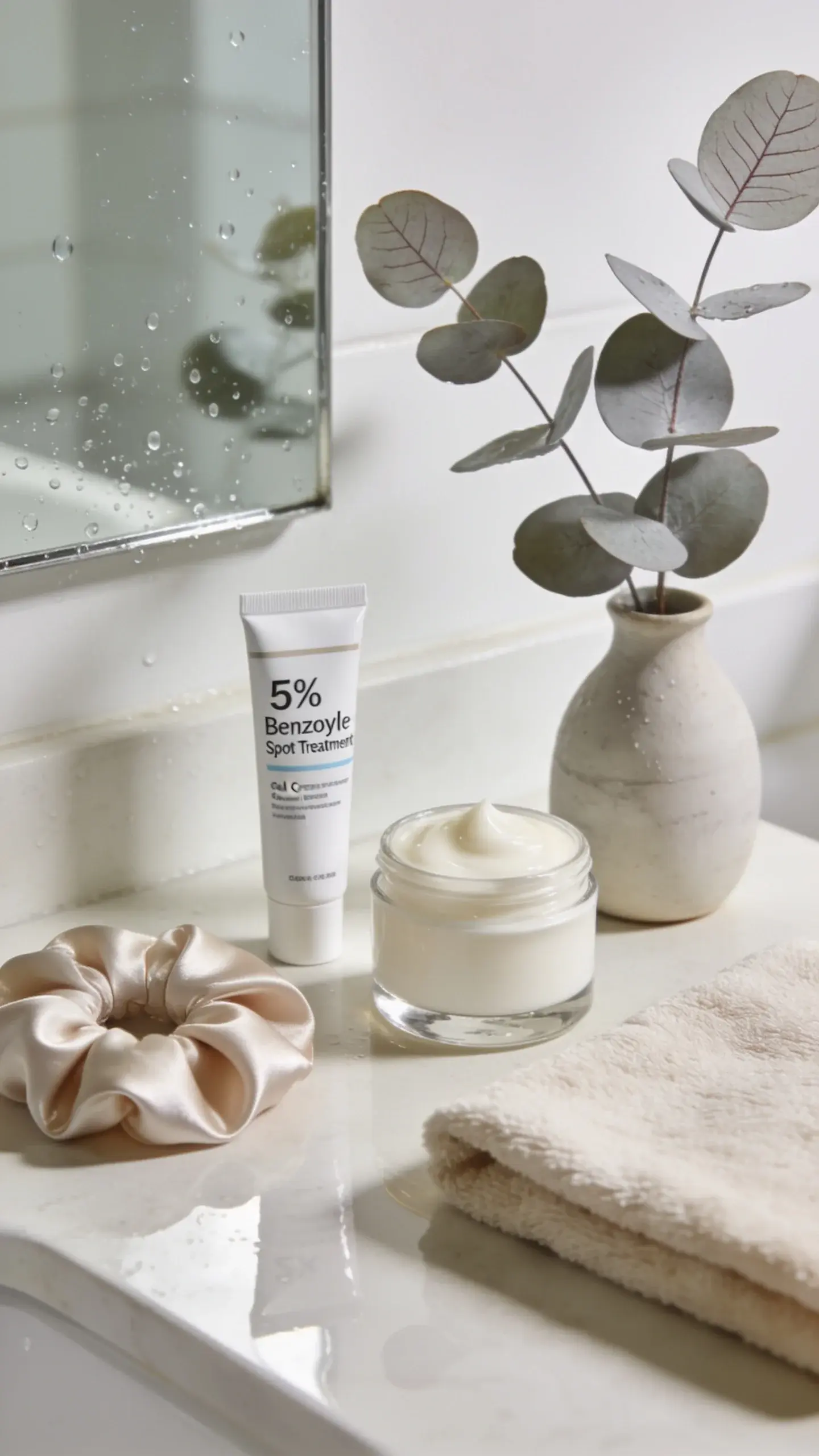
If You’re Using Benzoyl Peroxide
Use 2.5% only, once every few nights, and buffer with moisturizer. It’s effective but drying; keep it targeted on inflamed pimples, not your whole face.
Weekly Add-Ons That Actually Help
You don’t need 47 products. Just a couple of smart extras.
- Hydrating Mask (1–2x/week): Look for urea (2–10%), glycerin, beta-glucan, or aloe. Rinse or tissue off; don’t let it crust.
- Slug-Lite: A whisper of balm on flaky spots only. Full-face slugging can trap acne—hard pass.
- Spot Treatments: Sulfur or hydrocolloid patches for angry pimples. Tea tree? Only if well-formulated and your skin doesn’t hate fragrance.
Ingredients That Love Dry, Acne-Prone Skin
Balance is the name of the game. You want calm + clear.
- Hydrators: Glycerin, hyaluronic acid, panthenol, beta-glucan, aloe, urea (gentle, humectant + smoothing)
- Barrier Builders: Ceramides, cholesterol, fatty acids, squalane
- Acne-Friendly Soothers: Niacinamide, azelaic acid, green tea extract
- Smart Actives: Retinal/retinol (slowly), PHA, low lactic acid
Ingredients To Approach With Caution
- High-Strength Acids: Strong glycolic/mandelic daily = flaky chaos
- High Alcohol + Fragrance: Barrier tantrums, redness, more breakouts
- Coconut Oil, Heavy Butters: Can clog for some; patch test first
Sample AM/PM Routine You Can Copy
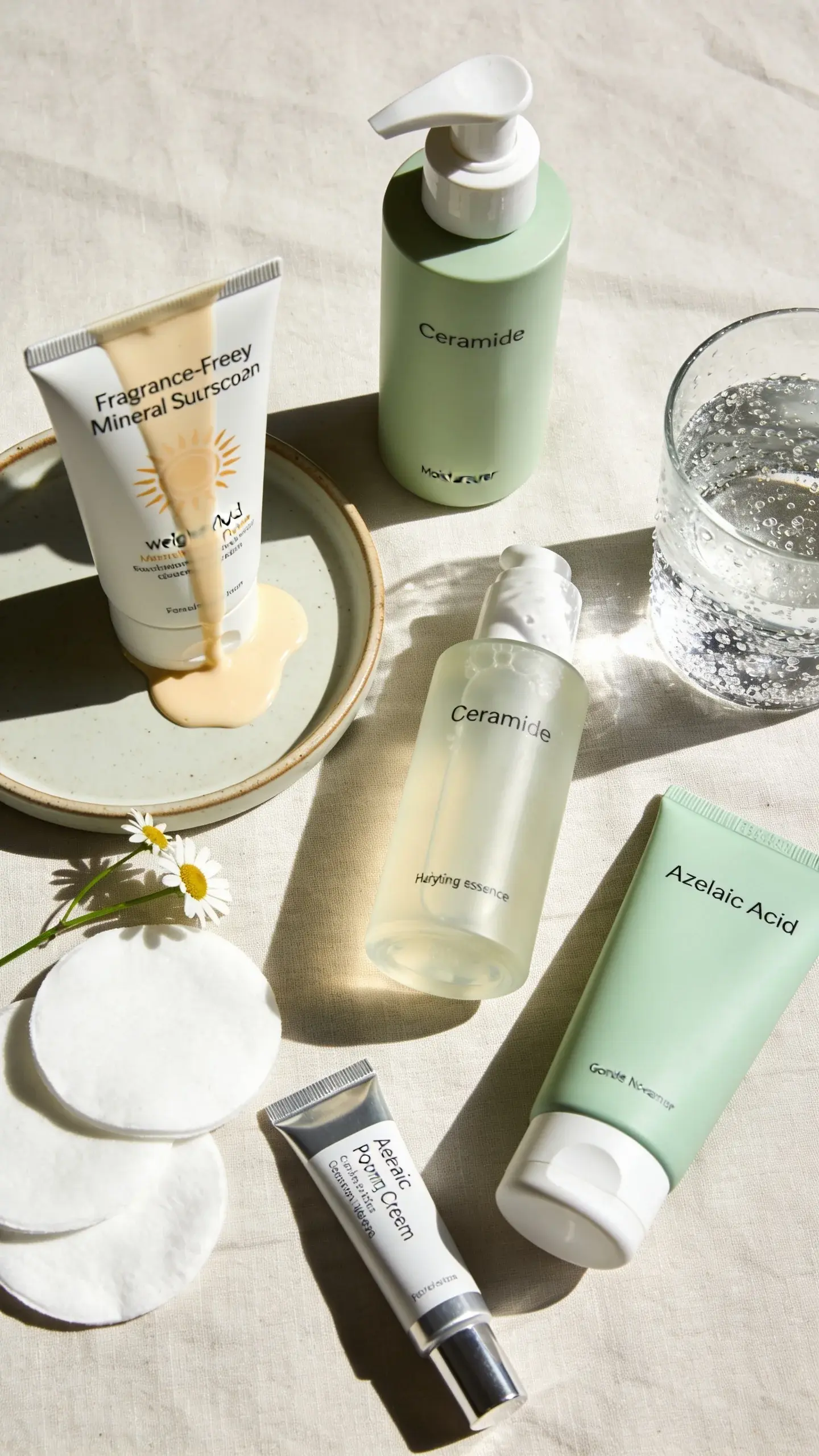
AM
- Rinse or gentle cleanse
- Hydrating toner (2 layers)
- Niacinamide serum (or azelaic acid)
- Light ceramide moisturizer
- SPF 30–50
PM
- Oil cleanse → gentle cleanser
- Hydrating essence
- Retinal 2–3x/week; azelaic acid on off-nights
- Ceramide moisturizer
- Thin balm on flaky zones if needed
Adjustment Timeline
- Week 1–2: Focus on hydration and barrier. Ditch harsh scrubs/toners.
- Week 3–4: Introduce retinoid 1–2x/week.
- Week 5–8: Increase retinoid to 3–4x/week if comfy. Fade marks, fewer clogs.
FYI: If irritation spikes, scale back and moisturize more. Your barrier always wins.
Lifestyle Tweaks That Make A Real Difference
Small habits add up. None are magic, but together they help.
- Shower Smarts: Lukewarm water, short showers, fragrance-free body wash around jawline/back.
- Laundry + Linens: Fragrance-free detergent; change pillowcases 2–3x/week.
- Humidifier: Game-changer in dry climates. Your face drinks the air.
- Diet, Real Talk: No need for extreme bans. If dairy or high-glycemic foods flare you, reduce them and see.
- Hands Off: Stop picking. Hydrocolloid patches are your fidget spinner.
FAQs
Can I use retinoids if my skin is already dry and flaky?
Yes, but go slow. Start 1–2 nights per week, buffer with moisturizer, and avoid using on actively peeling areas. If you sting or get fire-face, pause for a week, load up on ceramides and panthenol, then restart gently.
What kind of sunscreen won’t make me break out?
Look for lightweight gels, fluids, or mineral-hybrid formulas labeled non-comedogenic. Zinc oxide tends to soothe, but newer chemical filters can feel lighter. The best sunscreen is the one you’ll wear daily—texture > theory, IMO.
How do I hydrate without clogging my pores?
Layer humectants first (glycerin, HA, panthenol), then seal with a breathable moisturizer that includes ceramides and squalane. Skip heavy occlusives all over; spot-occlude only where you flake. Watch for rich butters if you clog easily.
Do I need exfoliation at all?
A little helps, a lot hurts. Try PHA or low-dose lactic acid once weekly to smooth flakes so treatments penetrate better. If your skin feels tight or looks shiny-stretched, you overdid it—back off and hydrate.
Is benzoyl peroxide too harsh for dry skin?
It can be, but 2.5% used sparingly works for many. Apply over moisturizer, keep it to active pimples or oilier zones, and limit to a few nights weekly. Balance with barrier care so you don’t trade zits for sandpaper cheeks.
How long until I see results?
Hydration and glow can improve in a week. Fewer breakouts and smoother texture usually show up around 4–8 weeks with consistent use. Post-acne marks fade over 2–3 months—patience beats product hopping.
Conclusion: Calm Skin Beats Aggressive Skin
If your skin feels dry and breaks out, treat it like a sensitive overachiever—capable, but quick to burn out. Build a routine that hydrates first, then add gentle acne fighters and sunscreen every morning. Consistency > intensity. Keep it simple, listen to your barrier, and watch your skin chill out—finally.