
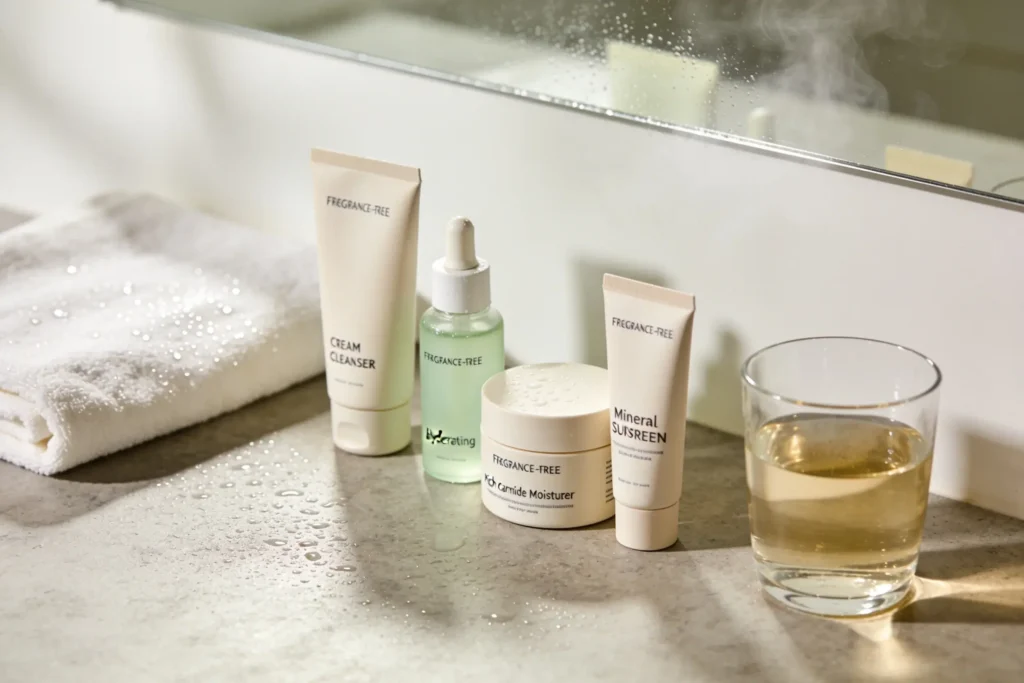
If your face throws a tantrum every time you try a new product, you’re in the right place. Dry, sensitive skin needs gentleness, not a chemistry experiment. This routine keeps things simple, soothing, and effective—without turning your bathroom into a lab. Ready to stop the flaking, the tightness, and the random redness? Let’s build a routine your skin will actually like.
Know Your Enemy: What “Dry Sensitive” Really Means
Dry skin lacks oil and often struggles with a weak moisture barrier. Sensitive skin reacts easily—to fragrance, harsh actives, hot water, even weather. Combine the two and you’ve got skin that says “nope” a lot. The fix? Hydration + barrier repair + minimal irritation.
Common Red Flags
- Flaky patches that don’t go away with basic lotion
- Stinging or burning after washing or applying products
- Tightness after showers or in AC-heavy rooms
- Random redness after sun, wind, or spicy skincare
The Gentle AM Routine (5 Minutes, Zero Drama)
You don’t need a 12-step routine. You need the right four.
- Cleanse (Optional): If your face isn’t dirty or oily in the morning, simply rinse with lukewarm water. If you want a cleanser, choose a fragrance-free, creamy cleanser with glycerin or ceramides.
- Hydrating Layer: Apply a hydrating serum or essence with glycerin, hyaluronic acid, or panthenol. Press it in while skin is slightly damp.
- Moisturize: Use a ceramide-rich cream that feels slightly occlusive (but not greasy). Think creams with squalane, shea butter, or cholesterol.
- SPF 30–50: Go for a mineral sunscreen (zinc oxide or titanium dioxide) if chemical filters sting you. Look for “for sensitive skin” on the label, and avoid added fragrance.
Pro Tip: Layering Without Pilling
- Use pea-sized amounts and let each step set for 30–60 seconds.
- Apply SPF last and don’t rub it like you’re polishing a car—press and glide.
The PM Routine (Repair Mode: On)
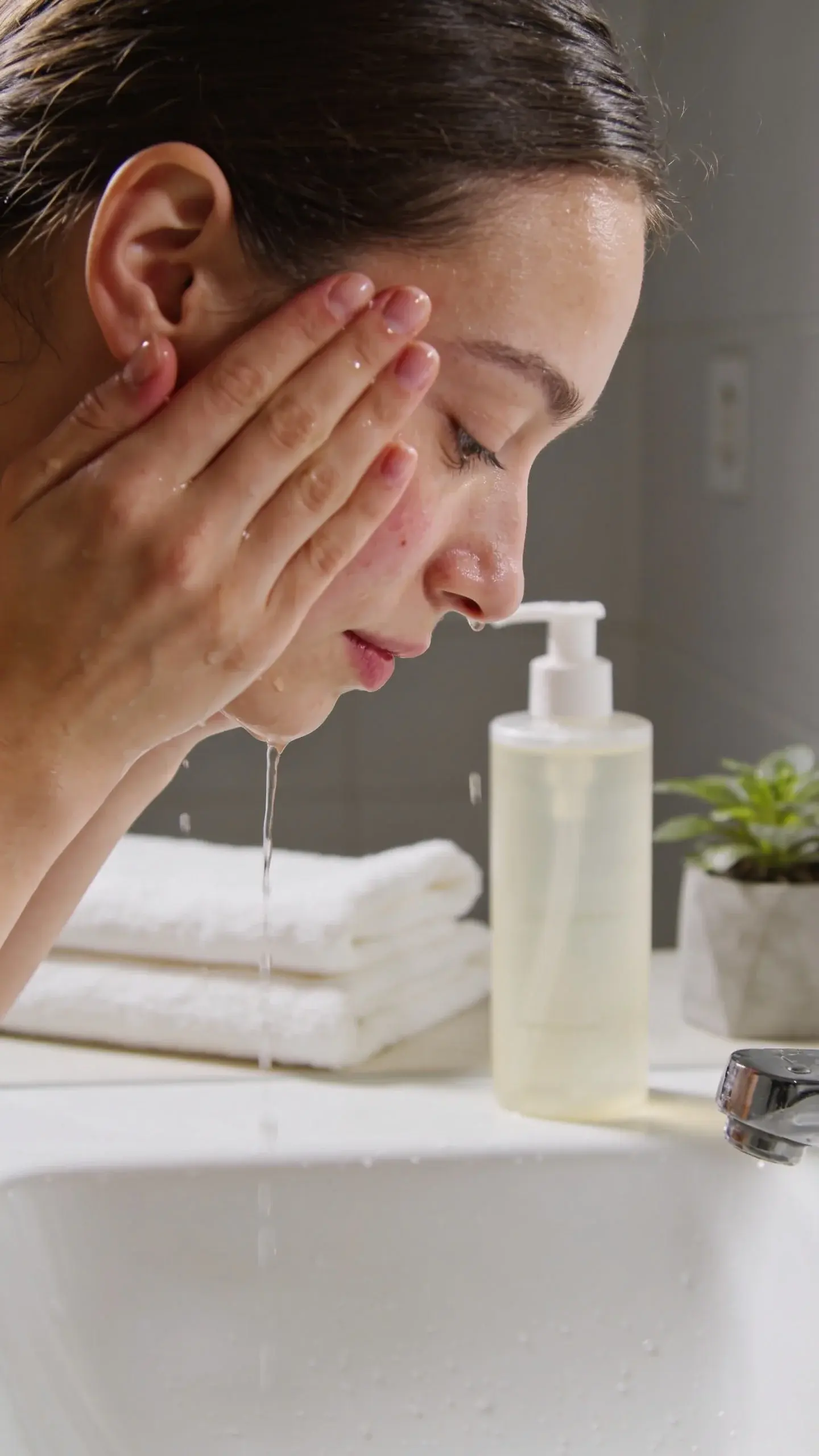
Evening is when you fix the barrier and lock in moisture.
- Cleanse: Gently remove sunscreen and makeup with a balmy or milky cleanser. If you wear heavy makeup, use a balm first, then a creamy cleanser—both fragrance-free.
- Hydrate: Repeat your hydrating serum or essence. If your skin feels super tight, try two layers, 30 seconds apart.
- Seal + Repair: Use a barrier repair cream with ceramides, cholesterol, and fatty acids. If you’re extra dry, add a few drops of squalane oil on top.
Slugging (The Right Way)
Slugging = applying a thin layer of petrolatum or balm at the end to trap moisture. Great for very dry, flaky areas 2–3 nights a week. Avoid if you’re acne-prone or if you used strong actives. Thin layer only—no glazed-donut impersonations needed.
Ingredients Your Skin Will Love (And The Ones It Won’t)
Yes, please:
- Ceramides, cholesterol, fatty acids: Rebuild your barrier
- Glycerin, hyaluronic acid, panthenol: Pull in water
- Squalane, shea butter: Soft, non-irritating emollients
- Colloidal oatmeal, allantoin, bisabolol: Calm and soothe
- Niacinamide (2–4%): Strengthens skin—keep it low to avoid tingling
Hard pass (or go slow):
- Fragrance and essential oils: Cute in candles, not on sensitive faces
- Strong acids (glycolic, high-strength peels): Too spicy
- Alcohol-heavy toners: Instant tightness, zero benefits
- Retinoids: Not banned, but start ultra-low and buffer with moisturizer
If You Want Gentle Exfoliation
Try lactic acid 5–8% or a PHA (gluconolactone) once a week. Sandwich it: moisturizer → gentle exfoliant → moisturizer. If it stings more than 10 seconds, rinse and bail. Your barrier comes first, IMO.
Seasonal Tweaks That Make A Big Difference
Your skin’s needs change with weather. So should your routine.
- Winter: Heavier cream, consider humidifier, slug flaky spots, skip hot showers (sorry).
- Summer: Lighter moisturizer, SPF always, reapply if you’re outside, and use a hydrating mist for quick relief.
- Travel: Pack travel-size basics and a barrier balm. Plane air is basically a moisture vampire.
How To Patch Test (So You Don’t Regret Tomorrow)
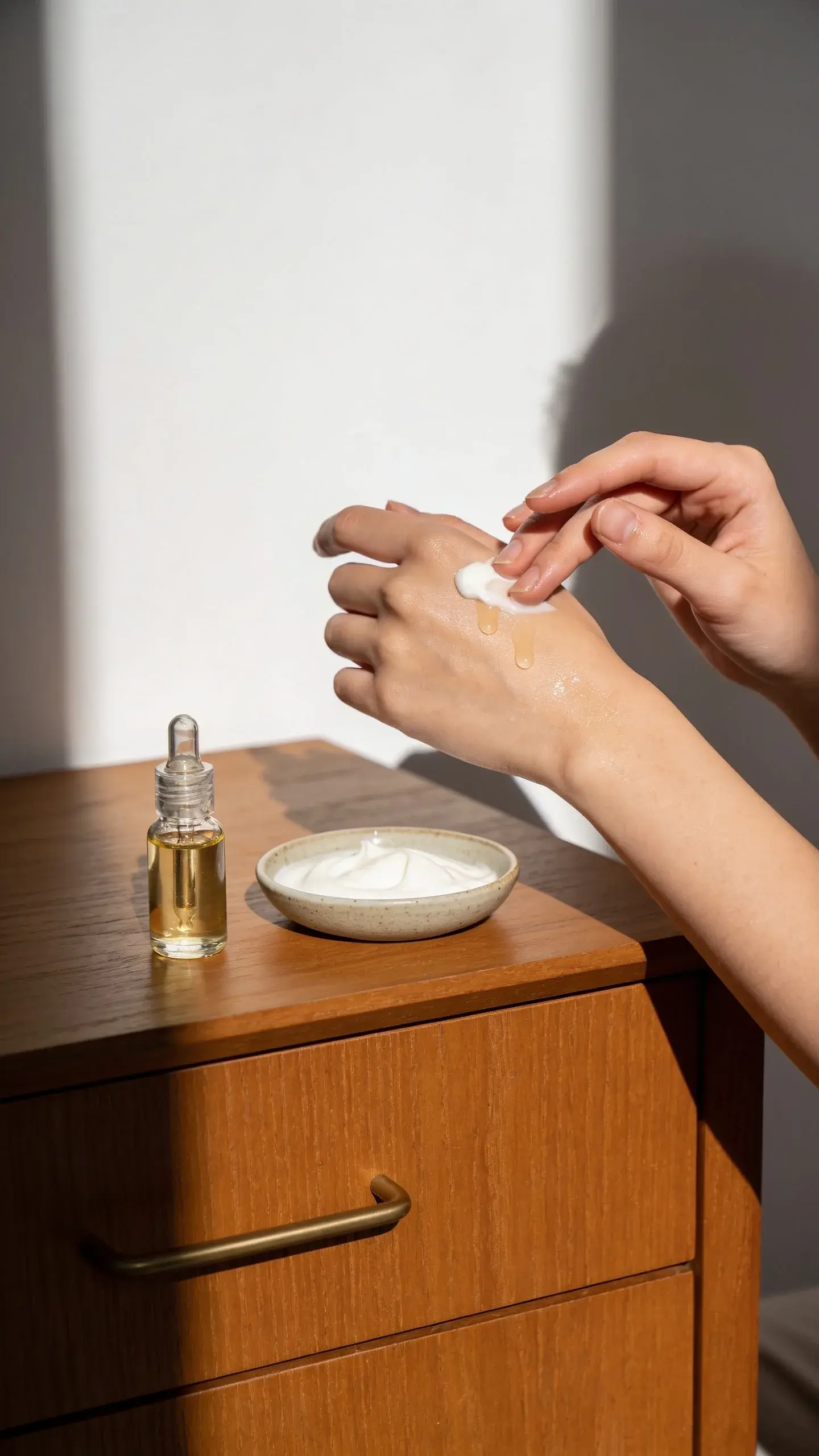
You don’t need to gamble with your face. Test first.
- Apply a tiny amount of the new product behind your ear or along your jawline.
- Wait 24–48 hours. Watch for redness, itching, or heat.
- If it’s fine, use it every other night for a week before going daily.
When Irritation Happens
Stop all actives. Use a minimal routine for 3–7 days:
- Creamy cleanser
- Soothing serum (panthenol or colloidal oatmeal)
- Barrier cream + optional petrolatum on raw spots
If burning persists, consult a derm. FYI, no product is worth being uncomfortable for weeks.
Building A Minimal, Mighty Routine (Shopping List)
You don’t need fancy. You need functional. Look for these labels:
- Cleanser: “Creamy,” “hydrating,” “fragrance-free,” with glycerin or ceramides
- Hydrator: “Hyaluronic acid,” “glycerin,” “panthenol,” “essence”
- Moisturizer: “Ceramides,” “cholesterol,” “shea,” “squalane”
- Sunscreen: “Mineral,” “zinc oxide,” “for sensitive skin,” SPF 30–50
- Optional soothers: “Colloidal oatmeal,” “allantoin,” “bisabolol”
Sample Routine You Can Copy-Paste
Morning:
- Rinse or gentle cleanse
- Hydrating serum
- Ceramide cream
- Mineral SPF
Night:
- Gentle cleanse
- Hydrating serum (1–2 layers)
- Barrier repair cream
- Optional: thin petrolatum on flaky spots
FAQs
Can I use retinol if I have dry, sensitive skin?
Yes, but go slow. Start with a low-strength retinal or retinol 0.1–0.3% once a week, buffer with moisturizer before and after, and increase only if your skin stays calm. If you get persistent redness or peeling, pause for two weeks and focus on barrier repair.
Do I really need sunscreen if I’m indoors all day?
If you sit near windows or use screens (blue light + UVA), yes. A light mineral SPF protects your skin barrier and reduces redness triggers. Reapply if you get direct sunlight for more than a couple of hours.
What’s the difference between dry and dehydrated skin?
Dry skin lacks oil; dehydrated skin lacks water. You can be both. Fix dehydration with humectants (glycerin, HA) and fix dryness with emollients and occlusives (ceramides, squalane, shea).
Why does everything sting when I wash my face?
Likely a compromised barrier or a cleanser that’s too harsh. Switch to a low-foam, creamy cleanser, use lukewarm water, and moisturize immediately after patting dry. If stinging continues, simplify your routine and avoid actives for a week.
How long until my skin feels better?
You’ll feel relief in a few days if you simplify and moisturize well. For deeper barrier repair, give it 4–6 weeks. Consistency beats fancy products, IMO.
Can makeup work with dry sensitive skin?
Absolutely. Choose hydrating, fragrance-free bases, avoid heavy powders, and prep with a ceramide cream. A damp sponge can help blend without dragging or irritating.
Conclusion: Simple, Soothing, Consistent Wins
Dry, sensitive skin thrives when you keep it calm and cushioned. Focus on hydration, barrier repair, and gentle sun protection, then add extras slowly. Your skin doesn’t need more products—it needs the right ones used consistently. Keep it simple, be patient, and enjoy that comfy, glow-y comeback.