
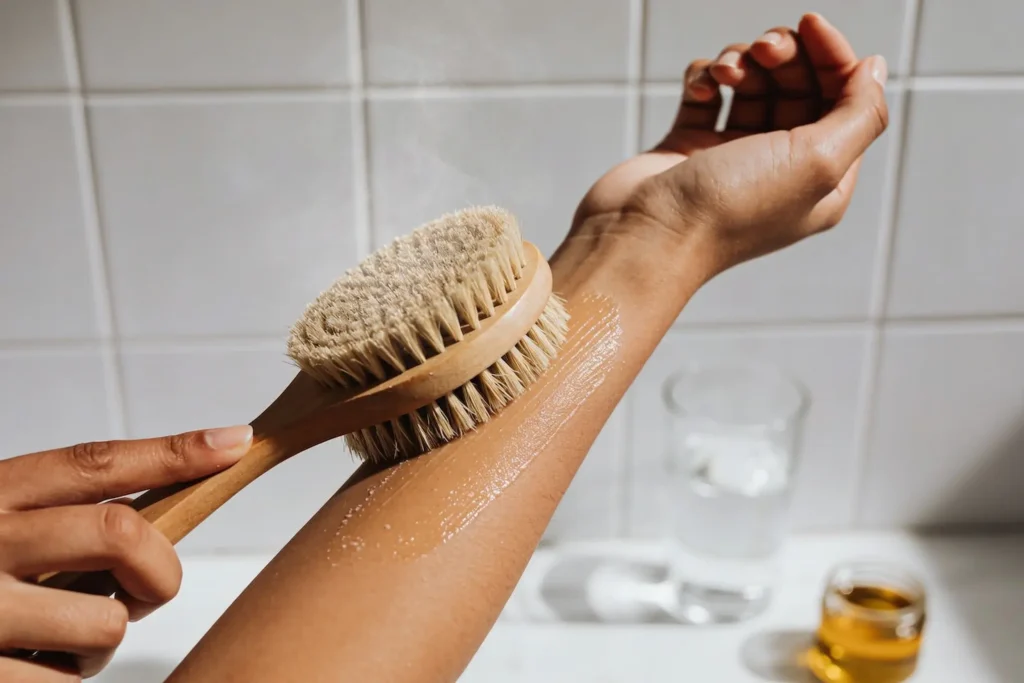
Want skin that feels baby-soft and looks brighter—without booking a facial? Dry brushing can help, and it only takes a few minutes. We’ll cover the exact steps, the common mistakes, and how to make it feel spa-worthy instead of scratchy. Grab a brush, roll up your sleeves, and let’s get your glow on.
Why Dry Brushing Deserves a Spot in Your Routine
Dry brushing exfoliates dead skin, boosts surface circulation, and can make your moisturizer work harder. You’ll get that immediate “wow, smooth” feeling plus a subtle, all-over brightness. Some folks swear it helps with the look of keratosis pilaris and ingrown hairs. FYI: it won’t melt fat or cure cellulite, but it can make skin look more even—think camera filter, not wizardry.
Choosing the Right Brush: Your MVP Tool
Not all brushes are created equal. You want natural bristles that feel firm but not scratchy—like a loofah with standards. A long handle helps you reach your back without acrobatics.
What To Look For
- Bristle Type: Natural boar or cactus fibers. Avoid super-soft synthetic if you want results or super-rough if you value your epidermis.
- Firmness: Medium-firm for most. Sensitive skin? Go slightly softer.
- Shape: Hand strap for control, long handle for backs-of-the-back.
- Cleanability: A brush that dries fast and doesn’t trap gunk.
The Step-by-Step: How To Dry Brush Like a Pro
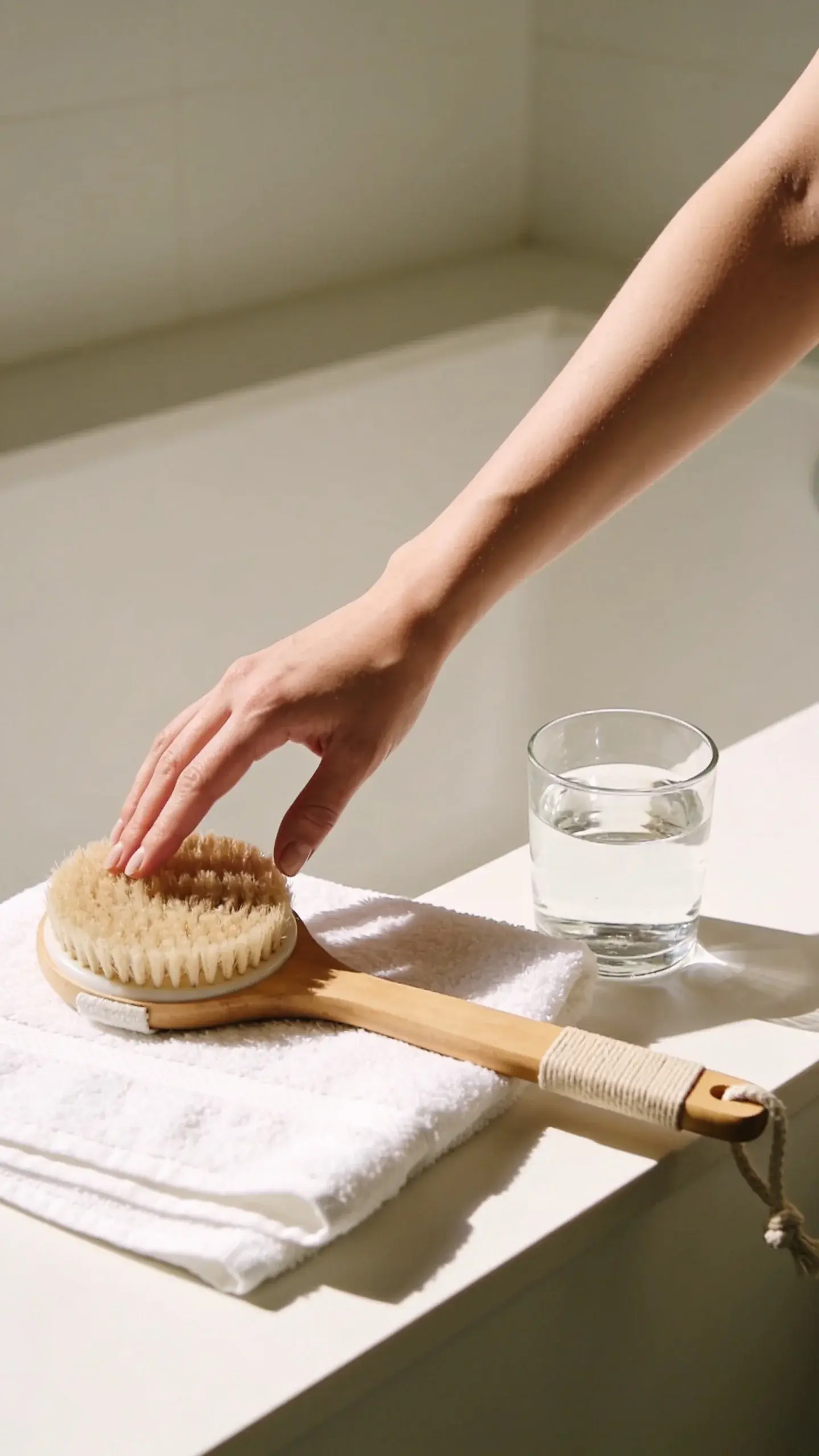
Timing matters. Dry brush before you shower on completely dry skin, then rinse off the dead-skin confetti. Moisturize right after.
- Start at your feet. Use light-to-medium pressure, short strokes upward toward your heart. Think “firm hug,” not “sandpaper challenge.”
- Move up the legs. Ankles to calves to thighs. Brush each section 6–10 strokes. Go lighter on inner thighs.
- Hit the hands and arms. Fingers to wrists to shoulders, always brushing toward the heart. Elbows get a few extra passes.
- Torso time. From lower abdomen up toward the chest with upward strokes. For the stomach, use gentle clockwise circles around the belly button.
- Back and booty. Use the long handle or ask a very patient partner. Brush upward on the lower back and glutes.
- Chest and neck. Super gentle here. Short, light strokes toward the heart. Skip delicate areas if they feel irritated.
- Shower and seal. Rinse, then apply a nourishing body oil or lotion while skin is still slightly damp to lock in moisture.
How Much Pressure Is Right?
You should feel stimulation, not stinging. Skin may look slightly pink afterward—that’s normal. If you see red streaks or feel burning, you went too hard. Dial it back, champ.
Frequency, Timing, and What to Expect
Consistency beats intensity. Most people do well with 2–4 times per week. If your skin feels rougher (or moody), scale back.
- Morning wins: Dry brushing perks you up and pairs well with a quick rinse.
- Evening chill: Go lighter so you don’t overstimulate before bed.
- Results timeline: Smoother skin immediately; brighter tone in 1–2 weeks with regular use.
Pair It With Products That Actually Help
Dry brushing preps skin, but the aftercare makes the glow last. Think hydration plus gentle actives on off-days.
After Brushing
- Hydrate: Ceramide or squalane lotions, or a light body oil. Occlusives like shea butter lock it in.
- Sensitive skin? Choose fragrance-free to avoid surprise drama.
On Non-Brushing Days
- Chemical exfoliation (optional): A mild AHA/BHA body lotion 1–2x weekly can smooth texture. Don’t stack with brushing the same day.
- Sun care: If skin will see sun, wear SPF. Smooth skin burns faster—IMO it’s rude but true.
Common Mistakes (And Easy Fixes)
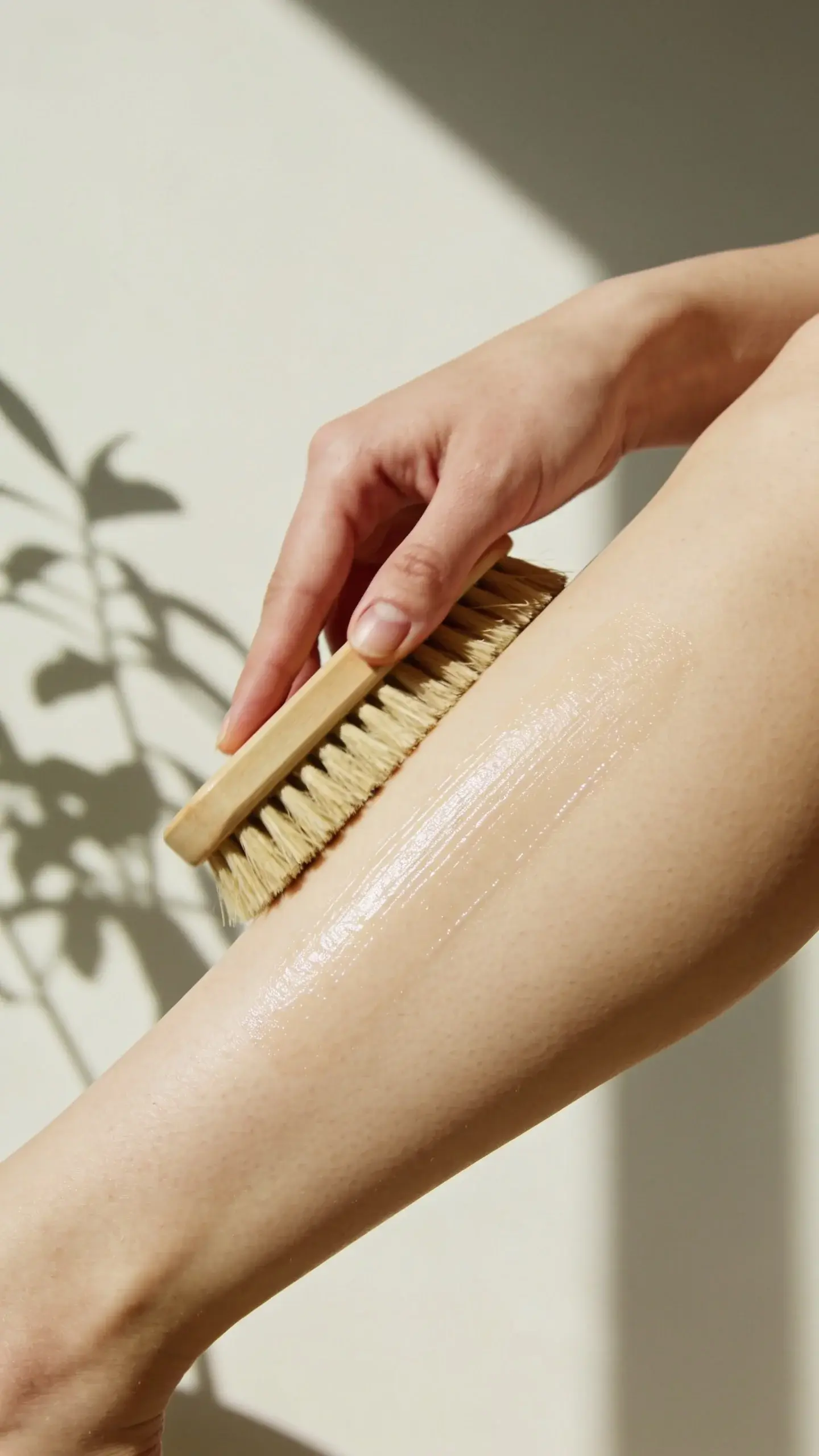
- Going too hard: More pressure ≠ more glow. It just equals irritation.
- Brushing wet skin: It reduces friction and effectiveness. Keep it dry.
- Skipping moisturizer: You just exfoliated—don’t leave skin thirsty.
- Brushing broken or inflamed skin: Avoid cuts, rashes, sunburn, eczema flares, and active acne.
- Never cleaning the brush: Gross. See below.
Hygiene 101: Keep Your Brush Clean
Your brush collects oils and dead skin (glamorous, right?). Keep it fresh so you don’t redeposit gunk.
- Weekly: Wash with a gentle soap or shampoo. Rinse thoroughly.
- Disinfect (monthly): Quick dip in diluted white vinegar (1:2 with water), then rinse.
- Dry: Bristles down on a towel in a well-ventilated spot. No damp cabinets.
- Replace: Every 6–12 months or sooner if bristles bend, smell, or shed.
Who Should Proceed With Caution
Dry brushing stays gentle for most people, but some should check with a pro first.
- Skin conditions: Eczema, psoriasis, active dermatitis—brushing can trigger flares.
- Fragile skin or diabetes: Higher risk of microtears or infection.
- Varicose veins: Brush around them lightly or skip those areas.
- Face and neck: Use ultra-gentle tools or skip—facial skin is delicate. IMO, use a soft chemical exfoliant instead.
FAQ
Does dry brushing really help with cellulite?
It won’t erase cellulite—nothing topical does—but it can make skin look smoother temporarily by boosting surface circulation and sloughing off dullness. Think “improved appearance,” not “miracle.”
Can I dry brush if I have sensitive skin?
Yes, with tweaks. Choose softer bristles, use the lightest pressure, brush less often (1–2x weekly), and moisturize immediately afterward. If you see irritation that lasts longer than an hour, pause and reassess.
Should I shower before or after dry brushing?
After. Dry brushing works best on completely dry skin, then you rinse away debris in the shower. Follow with moisturizer while skin is still slightly damp.
Is it safe to dry brush during pregnancy?
Generally yes, especially for legs and arms with gentle pressure. Skip the belly if it feels uncomfortable or sensitive. When in doubt, ask your healthcare provider—better safe than itchy.
How long should a dry brushing session take?
About 3–5 minutes. Quick, systematic, and efficient. If you’re spending 15 minutes, you’re either doing a full-on spa ritual or auditioning for a brush commercial.
Can I use the same brush for body and face?
I wouldn’t. Facial skin is thinner and more sensitive. If you must, get a specific ultra-soft facial brush—or better yet, use a gentle exfoliating toner instead.
Conclusion: Small Habit, Big Glow
Dry brushing takes minutes and pays off with smoother, brighter skin that actually drinks up your moisturizer. Start light, stay consistent, and keep that brush clean. Pair it with smart aftercare and SPF, and your skin will return the favor—glow included, filters optional. FYI: your towels might get jealous of how soft you feel.