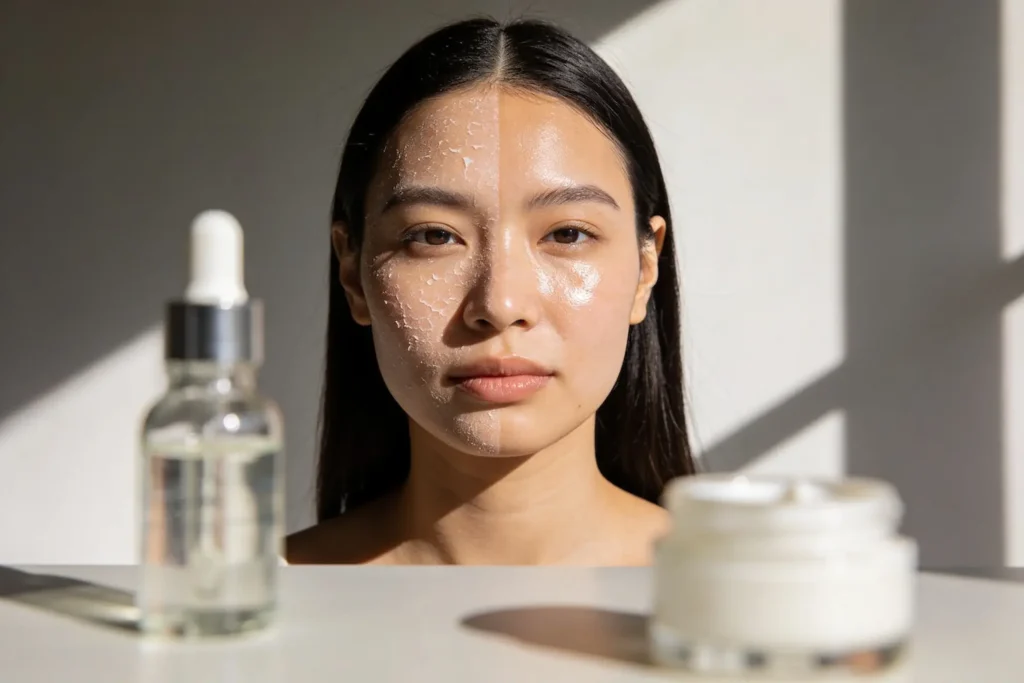
You wake up, look in the mirror, and your face says “Sahara Desert.” Same. Dry, tight, flaky skin can make makeup look crusty and your mood even crustier. The good news? You can fix it with a few smart swaps and habits. Let’s cut the fluff and get into what causes facial dryness, how to treat it fast, and how to stop it from coming back.
Why Your Face Feels Like Parchment
Your skin doesn’t just “decide” to be dry. Something messes with your moisture barrier or steals your natural oils. Here’s what usually does it:
- Over-cleansing or harsh products: Sulfates, strong acids every night, alcohol-heavy toners. Your barrier taps out.
- Weather and environment: Cold, wind, low humidity, blasting indoor heat, or AC suck moisture out.
- Hot showers and long baths: Cozy? Yes. Moisture-killing? Also yes.
- Aging and genetics: Less sebum and fewer natural moisturizing factors as you age. Thanks, biology.
- Health factors: Eczema, psoriasis, hypothyroidism, or certain meds (like acne treatments) dry you out.
- Lifestyle stuff: Not enough water, low-fat diets, or scrubbing like you’re polishing silver.
Spotting True Dryness vs. Dehydration
Not all “dry” is dry. Some of it is dehydration (lack of water), not oil.
- Dry skin type: Feels rough, flakes, barely gets shiny, loves rich creams.
- Dehydrated skin condition: Feels tight, looks dull, fine lines pop (especially after washing). Even oily skin can be dehydrated.
Quick At-Home Clues
- Blot test: Press tissue on clean skin. No oil anywhere? You lean dry.
- Tight-and-shiny paradox: If skin feels tight but still looks slick, you’re probably dehydrated.
Your No-Nonsense Treatment Plan
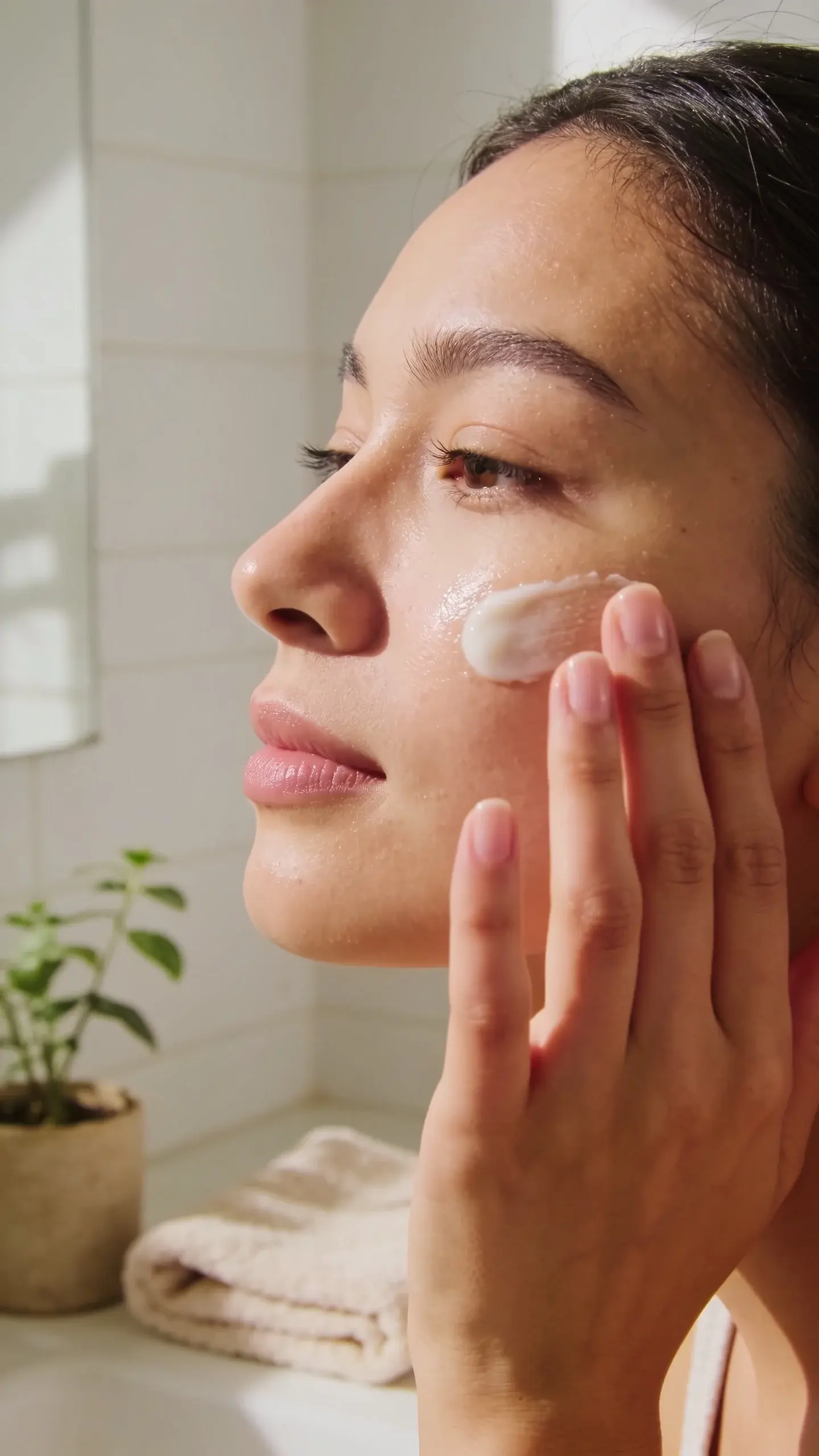
You don’t need 12 steps. You need the right ones, used consistently.
Morning Routine (3–5 Minutes)
- Gentle cleanse or just rinse: Use a creamy, non-foaming cleanser, or just splash with lukewarm water if you didn’t sweat.
- Hydrating layer: Apply a humectant serum (hyaluronic acid, glycerin, panthenol). Slightly damp skin = better results.
- Seal it in: Use a barrier-focused moisturizer with ceramides, cholesterol, and fatty acids.
- SPF 30+ every day: Sunscreen doubles as moisture protection. Look for hydrating formulas with added squalane or hyaluronic acid.
Evening Routine (5 Minutes)
- Thorough but gentle cleanse: If you wear makeup or SPF, try an oil or balm cleanser, then a creamy cleanser (no scrubbing).
- Hydrating toner or essence: Optional, but great for layering water back in.
- Treatment, if needed: Low-strength retinoid 2–3 nights per week. Buffer with moisturizer to avoid flakes.
- Rich moisturizer: Thicker at night. Look for shea butter, squalane, ceramides.
- Slug (sometimes): If you’re painfully dry, top with a thin layer of petrolatum or a balm on cheeks and around the nose. Not for acne-prone areas, IMO.
Ingredients That Actually Work
- Humectants: Glycerin, hyaluronic acid, panthenol, aloe. They pull in water. Pair with an occlusive so it doesn’t escape.
- Emollients: Squalane, jojoba, triglycerides smooth rough patches.
- Occlusives: Petrolatum, lanolin, beeswax lock moisture in. Petrolatum is MVP for barrier repair.
- Barrier builders: Ceramides, cholesterol, fatty acids put the “mortar” back between your skin cells.
- Anti-inflammatories: Centella, colloidal oatmeal, allantoin calm redness and irritation.
Habits That Keep Dryness Away
You can’t out-cream bad habits. Fix the environment and routine to win long-term.
Shower and Water Temperature
- Use lukewarm water: Hot water strips oils fast.
- Shorten showers to 10 minutes: Sorry, I know.
- Moisturize within 60 seconds of washing: Trap that water while it’s there.
Humidify Your Space
- Humidifier at 40–50%: Your skin drinks from the air. Bedroom placement helps overnight.
- Travel tip: On planes or in hotels, apply a thicker cream pre-flight and reapply mid-flight. Hydration > judgmental seatmate.
Product Rules To Live By
- Drop the strip-y stuff: Ditch alcohol-heavy toners, strong scrubs, daily peels.
- Exfoliate smart: Once weekly with lactic acid or a gentle enzyme if you’re flaky. Overdo it and you’ll backslide.
- Fragrance-free if you’re reactive: Especially with eczema-prone skin.
Seasonal Switch-Ups That Matter
Skin changes with the weather, so your routine should too.
- Winter: Heavier creams, add petrolatum at night, run a humidifier, SPF still daily (yes, UV exists when it’s cold).
- Summer: Lighter gel-cream, keep humectants, and use hydrating SPF. Sweat doesn’t equal moisture.
- Windy days: Balm the high points of your face (cheeks, nose) before heading out.
When Dryness Means Something Else
Sometimes it’s not just “dry skin.” Watch for signs that call for a professional.
- Red, itchy, scaly patches or cracking: Could be eczema or contact dermatitis.
- Flaky eyebrows/sides of nose: Seborrheic dermatitis (aka facial dandruff) likes those areas.
- Persistent dryness with hair loss, fatigue, cold intolerance: Ask your doctor about thyroid screening.
- Meds check: Isotretinoin, diuretics, some antidepressants can dry skin. Don’t stop meds—just plan skincare around them.
Budget vs. Bougie: Do You Need Fancy Stuff?
Short answer: No. Formulation matters more than price.
- Drugstore wins: Ceramide moisturizers, glycerin serums, petrolatum ointments. Cheap, effective, boring—in a good way.
- Splurge if you want: Go for textures you’ll use daily. Consistency beats a $120 cream collecting dust.
FAQ
Should I exfoliate dry, flaky skin or will that make it worse?
Exfoliate gently and sparingly. Use a mild lactic acid or enzyme once a week to lift flakes without wrecking your barrier. Then moisturize like you mean it. If you see more redness or stinging, scale back.
Is face oil enough to fix dryness?
Not on its own. Oils soften and seal, but they don’t add water. Layer a humectant first, then a cream, and then oil if you want extra glow. Think sandwich, not solo act.
Can I still use retinoids if my skin is dry?
Yes, with strategy. Start 1–2 nights per week, use the “moisturizer-retinoid-moisturizer” sandwich, and avoid other actives on the same night. If you’re peeling nonstop, pause for a week and rebuild your barrier.
What’s the best moisturizer texture for very dry skin?
Go for creams or balms with ceramides, cholesterol, fatty acids, shea butter, and petrolatum. Lotions often feel nice but don’t always last. If your skin still feels tight after 30 minutes, level up the richness.
Do I need to drink more water to fix dry skin?
Hydration helps overall, but water alone won’t cure facial dryness. Focus on topical hydration, humidity control, and barrier repair. Still, don’t ignore your water bottle—your body appreciates it, FYI.
What sunscreen works best for dry skin?
Hydrating formulas with added squalane, glycerin, or hyaluronic acid. Cream textures beat gels here. If mineral sunscreens look chalky, try a hybrid or a tinted mineral—bonus: it usually looks better under makeup.
Conclusion: Your Face Can Chill Now
Dry skin on your face doesn’t need a 30-minute routine or a second mortgage. Use gentle cleansers, stack hydration, seal with a barrier-boosting moisturizer, and control your environment. Adjust with the seasons, exfoliate wisely, and keep sunscreen in the mix. Do that consistently and, IMO, your skin will go from “desert” to “dewy” way faster than you think.