
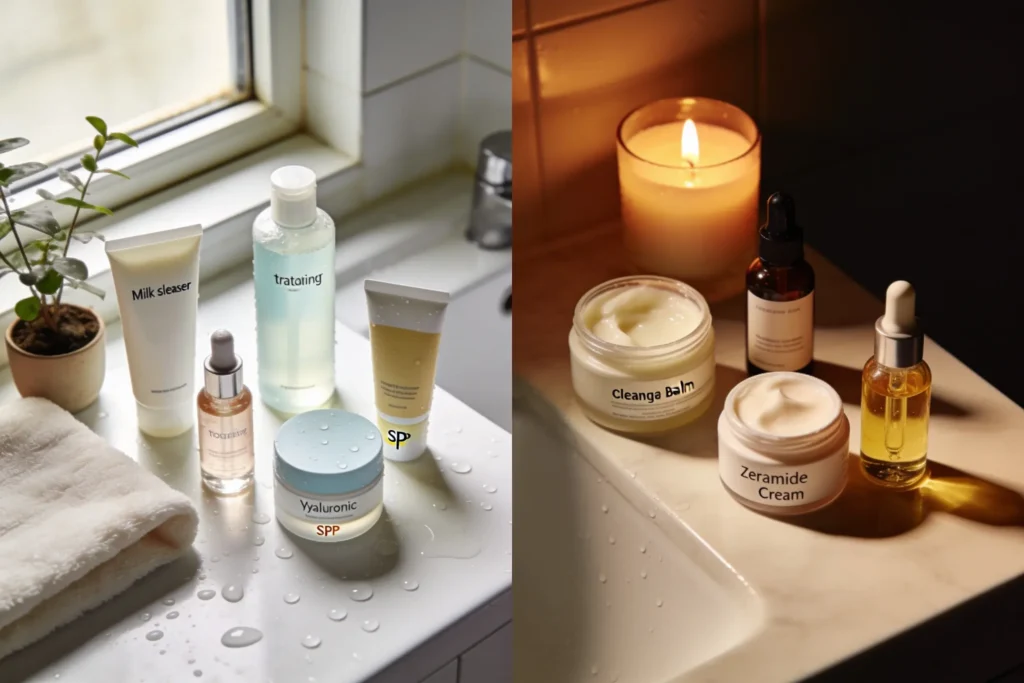
Let’s cut to the chase: dry skin needs TLC, not a 12-step odyssey. Morning and night routines should look like siblings, not twins — similar vibe, different jobs. You’ll protect by day, repair by night, and baby that moisture barrier like it’s your phone at 2% battery. Ready to stop flaking and start glowing?
Why Dry Skin Acts Differently AM vs PM
Your skin behaves like it’s on a 24-hour schedule. During the day, it faces UV, pollution, and office AC that basically mummifies your face. At night, it shifts into repair mode and loses more water while you sleep. So the strategy changes:
- AM = Shield and hydrate: gentle cleanse, quench, seal, and SPF.
- PM = Rebuild and drench: melt makeup, feed actives, and lock in layers.
The Morning Game Plan: Cushion, Then Guard
You want lightweight layers that hydrate without smothering. Think silk pajamas, not a winter parka.
Step 1: Gentle Cleanse (Or Just Rinse)
If you didn’t wake up oily, you can skip cleanser and use lukewarm water. If you need a cleanse, pick a low-foam, pH-balanced cream or milk cleanser so you don’t strip lipids.
Step 2: Hydrating Essence or Toner
Use a humectant-packed formula with glycerin, hyaluronic acid, or aloe. Press it in while skin is damp so it actually grabs water.
Step 3: Serum That Loves Dry Skin
Options:
- Hyaluronic acid + panthenol: quick plump for tight-feeling skin.
- Niacinamide (low %): helps barrier and redness without heaviness.
- Vitamin C derivative: brighter and protective, less stingy than L-ascorbic acid.
Step 4: Moisturizer That Seals Without Suffocating
Choose a cream with ceramides, squalane, and cholesterol. If you want extra glide under makeup, look for dimethicone — it’s like a soft-focus filter that traps hydration.
Step 5: SPF Is Non-Negotiable
Use SPF 30+ every single morning. Dry-skin-friendly picks:
- Mineral SPF with zinc oxide if you’re sensitive.
- Hydrating chemical SPF if you want zero white cast and dewy finish.
Pro tip: If SPF pills over your moisturizer, you used too much cream or didn’t let it set. Give each layer a minute to chill.
The Night Game Plan: Melt, Repair, Marinate

Night is for hardcore cuddling with your moisture barrier. You’ll remove gunk, feed it nutrients, and trap that goodness.
Step 1: Remove Makeup and Sunscreen
Start with a balm or oil cleanser to melt everything. Follow with a gentle non-foaming cleanser if you wear heavy makeup (aka double cleanse). No squeaky-clean finish — squeaky equals stripped.
Step 2: Hydration Sandwich
Layer a hydrating essence, then a serum, then mist or a splash of water before moisturizer. Yes, it sounds extra. Yes, it works.
Step 3: Repair-First Serums
Pick one:
- Peptides to support firmness and calm cranky skin.
- Azelaic acid (low %) if you deal with redness or bumpy texture.
- Retinal or gentle retinol 2-3 nights/week for glow and smoothness.
If you’re new to retinoids, buffer with a thin layer of moisturizer first. Your barrier will send a thank-you note.
Step 4: A Thicker Cream or Overnight Mask
Use a richer moisturizer with ceramides, shea butter, and urea (2-5%) to soften flakes. On brutal nights, top with a thin occlusive layer (petrolatum, lanolin, or squalane balm) on dry zones only. You’re sealing, not shellacking.
Key Ingredients Dry Skin Actually Drinks Up
– Humectants: glycerin, hyaluronic acid, panthenol, aloe. They pull in water.
– Barrier lipids: ceramides, cholesterol, fatty acids. They patch the “holes” in the wall.
– Emollients: squalane, shea, jojoba. They smooth rough texture.
– Occlusives: petrolatum, lanolin, dimethicone. They stop water from peacing out.
– Actives to use gently: retinal/retinol, azelaic acid, PHA (gluconolactone, lactobionic acid).
– Actives to dodge daily if you’re flaky: strong AHAs, high % vitamin C, drying clay or charcoal.
Seasonal Tweaks So You Don’t Turn Into A Lizard
– Winter: Switch to cream cleanser, thicker moisturizer, and add an occlusive at night. Run a humidifier (40–50% humidity is chef’s kiss).
– Summer: Lighter gel-cream by day, mineral SPF, and keep hydrating toners. At night, still repair but maybe ease up on heavy occlusives.
– Travel/AC days: Pocket-size face mist + mini moisturizer. Reapply SPF with a stick or cushion compact.
– After actives or sun: Reach for panthenol, centella, and colloidal oatmeal.
Common Mistakes That Keep You Dry

– Over-cleansing: Twice with a foaming wash? Nope.
– Skipping SPF: UV wrecks your barrier and collagen. Not negotiable.
– Only using oils: Oil ≠ hydration. You need water-binding humectants first.
– Too many actives at once: Red, stingy, flaky? Simplify for two weeks and rebuild.
– Hot showers to the face: Fun for two minutes, dehydrating for 12 hours. Lukewarm wins.
Sample Routines You Can Copy-Paste
Morning (5 Minutes)
- Rinse or cream cleanse.
- Hydrating essence/toner.
- Hyaluronic + panthenol serum.
- Ceramide moisturizer.
- SPF 30+ (bonus: dewy formula for glow).
Night (7–10 Minutes)
- Oil/balm cleanse, then gentle cleanser if needed.
- Hydrating essence.
- Peptide or retinal serum (alternate nights).
- Rich moisturizer with ceramides and urea.
- Occlusive on dry patches only.
FAQ
Do I need a separate day and night moisturizer?
Not always. If your budget says “one jar,” pick a ceramide-rich cream and apply a thinner layer in the morning, thicker at night. Add an occlusive at bedtime when you need extra lock-in.
Can I use retinol if I have dry skin?
Yes, just go slow. Start 1–2 nights a week, buffer with moisturizer, and avoid other exfoliants the same night. If you feel tight or stingy, drop frequency and focus on barrier repair for a week. IMO, retinal is friendlier yet effective.
Is toner necessary or just hype?
Hydrating toners and essences earn their spot for dry skin. They add water back fast and make your moisturizer work harder. Look for glycerin, hyaluronic acid, and panthenol; skip alcohol-heavy formulas.
What’s the best exfoliant for dry, flaky skin?
Try PHA or a very gentle lactic acid once a week. They smooth without wrecking your barrier. Always follow with a plush moisturizer. FYI, if you’re peeling from retinoids, pause exfoliation.
My makeup looks cakey over dry patches — help?
Hydrate, then wait 3–5 minutes before SPF and makeup. Use a lightweight, dimethicone-based primer to blur flakes. Press foundation with a damp sponge, don’t drag. Spot-conceal rather than layering all over.
Do facial oils fix dryness?
They help, but only as the finishing touch. Oils seal in moisture; they don’t add water. Pair a humectant layer first, then cream, then a drop or two of oil if you love the glow.
Bottom Line: Same Skin, Different Missions
Morning routines for dry skin should hydrate and defend. Night routines should repair and seal. Keep formulas gentle, layer humectants before creams, and call in occlusives when the air is rude. Stick with it for two weeks and, IMO, you’ll see the flake-to-glow plot twist you wanted.