
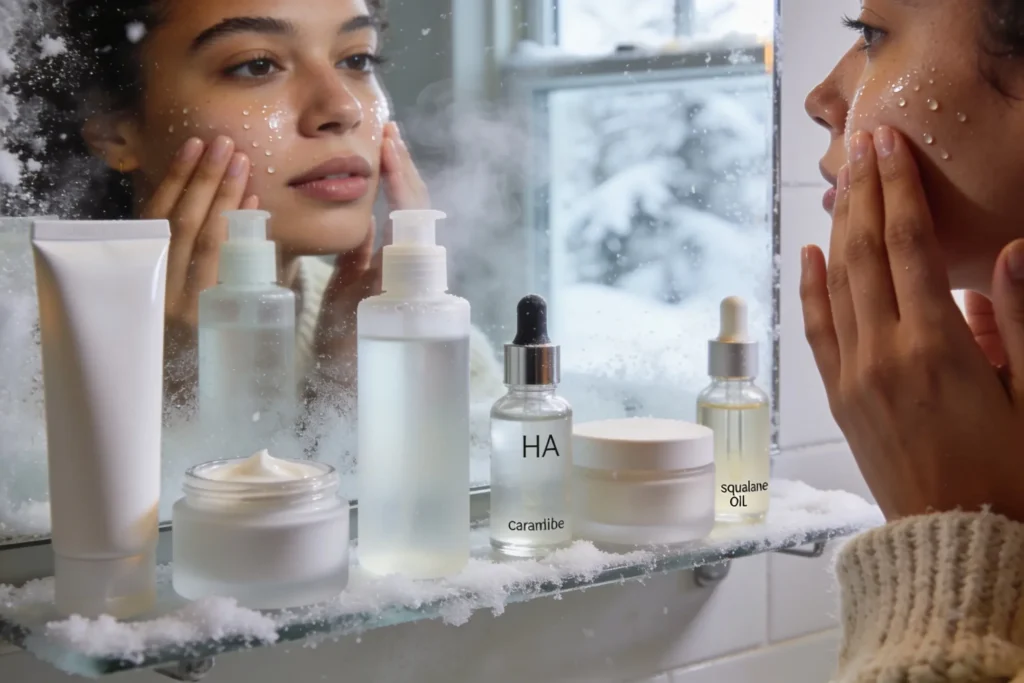
Let’s stop pretending “dewy” is the same as “dry and flaky.” If winter turns your face into a tight, dull mess, this routine fixes that—without a 14-step product parade. We’re talking smart swaps, barrier-loving ingredients, and cozy textures that actually hydrate. Ready to glow while everyone else peels? Let’s go.
Start With A Low-Drama Cleanse
Your cleanser sets the tone for your whole routine. In winter, ditch the foaming, high-pH stuff that leaves you squeaky (translation: stripped). Choose a gentle cream, milk, or oil cleanser that removes makeup and sunscreen while leaving your barrier intact.
What To Look For
- Non-foaming textures like cream, milk, or balm
- Humectants such as glycerin or hyaluronic acid
- Barrier helpers like ceramides and squalane
Pro Move
If you wear long-wear makeup, do a two-step cleanse at night: balm or oil first, then a creamy cleanser. In the morning, just rinse with lukewarm water or use a splash of micellar if you must. Your barrier will thank you.
Hydrate In Layers (Water First, Then Oil)
Dry skin often lacks both water and oil. You need both. Layer light hydrators under richer creams to trap that moisture in.
Your Hydration Sandwich
- Essence or toner with glycerin, panthenol, or hyaluronic acid. Apply to damp skin.
- Serum with hyaluronic acid, polyglutamic acid, or beta-glucan for deep hydration.
- Cream packed with ceramides, cholesterol, and fatty acids to seal it all in.
Quick Tip
Apply products to slightly damp skin. You lock in more water that way. Also, skip the burning-hot showers. Cozy? Yes. Skin-friendly? Absolutely not.
Feed Your Barrier With Workhorse Ingredients
Winter skincare = barrier repair season. Load up on ingredients that rebuild and protect your skin’s brick-and-mortar structure.
Barrier MVPs
- Ceramides + Cholesterol + Fatty Acids: The trifecta for repair
- Squalane: Lightweight oil mimic that softens without greasiness
- Niacinamide (2-5%): Calms redness, boosts ceramide production
- Urea (2-10%): Hydrates and smooths flaky patches
- Beta-Glucan: Soothes and holds water like a champ
IMO: Keep It Simple
You don’t need six serums. Pick one hydrating serum and one barrier cream that you’ll actually use daily. Consistency beats chaos.
Use Actives—But Winter-Proof Them
You don’t need to quit retinoids or acids in winter. Just use them smarter so your skin doesn’t revolt.
Retinoid Rules
- Use 2-3 nights per week max if you’re dry or sensitive.
- Try the moisture sandwich: cream, retinoid, cream.
- Consider gentler forms like retinaldehyde or lower-strength retinol.
Exfoliation Without Regret
- Skip daily acids. Aim for once weekly with lactic acid or PHA.
- Spot-exfoliate flaky areas instead of full-face if you tend to overdo it. We see you.
Seal The Deal: Occlusives At Night
Nighttime is repair time. An occlusive layer stops water from evaporating while you sleep, so you wake up soft, not sandpapery.
How To Slug (Smartly)
- Apply hydrating layers first.
- Add a rich cream with ceramides.
- Finish with a thin layer of occlusive on dry-prone zones: petrolatum, lanolin, or shea butter.
FYI: Full-face slugging every night can clog pores for some. Try targeted slugging on cheeks and around the mouth.
Daytime Defense: SPF Still Matters
Yes, even when it’s gray. UV and winter glare still age skin, and wind + cold already stress your barrier.
Winter-Friendly SPF Tips
- Choose a moisturizing SPF 30+ with ceramides or squalane.
- Layer SPF over a hydrating serum for comfort.
- Reapply if you sit by windows or spend time outdoors (snow reflects light).
Environment, Lifestyle, And Texture Tweaks
You can have the best routine, but your space and habits can sabotage your glow. Let’s fix that.
Make Your Air Less Thirsty
- Humidifier in your bedroom set around 40-50% humidity.
- Keep rooms below 73°F if you can—overheating dries air fast.
- Open a window for five minutes daily to circulate air. Your plants will cheer too.
Body And Lips Matter
- Switch to a cream body wash and apply body lotion or butter on damp skin.
- For lips: use lanolin or petrolatum, and avoid minty balms that sting.
Inside-Out Support
- Protein + healthy fats help your skin produce lipids.
- Hydrate steadily (electrolytes help more than chugging plain water).
- Limit long, scalding showers. I know. I’m sorry.
A Simple, Real-World Winter Routine
Keep it tight and consistent. Here’s a no-fuss plan that works.
Morning
- Rinse or gentle cleanse.
- Hydrating toner/essence.
- Hydrating serum (HA, beta-glucan, or polyglutamic acid).
- Barrier cream with ceramides/cholesterol/fatty acids.
- Moisturizing SPF 30+.
Night
- Creamy or oil cleanse.
- Hydrating toner or essence.
- Active step 2-3 nights/week: retinoid or gentle exfoliant (not both the same night).
- Barrier repair serum (niacinamide or urea) on non-active nights.
- Rich ceramide cream.
- Targeted occlusive on cheeks, lips, and around the mouth.
Weekly
- One gentle exfoliation session (lactic acid 5-10% or PHA).
- One soothing mask with colloidal oatmeal or honey if you need extra TLC.
FAQ
Can I still use vitamin C in winter if I have dry skin?
Yes—just pick a gentler form like sodium ascorbyl phosphate or THD ascorbate in a creamy base. Apply it after your hydrating toner and before your moisturizer. If your skin stings, alternate days or use it in the morning only.
What if my skin burns when I apply products?
Scale back immediately. Use a bland routine for a week: gentle cleanse, hydrating serum, ceramide cream, SPF. Avoid acids and retinoids until the sting stops. Add them back slowly—IMO, comfort beats speed.
Do I need a face oil on top of my moisturizer?
Not always. If your cream already includes oils or squalane, you might not need more. If you still feel tight, add a few drops of oil (squalane, marula, meadowfoam) after cream at night, or just occlude dry patches.
How do I fix flaky makeup in winter?
Prep like a pro: hydrating serum + rich cream, then wait five minutes. Use a hydrating primer and swap to cream or liquid formulas. Press, don’t rub. Midday, refresh with a mist + tiny dab of moisturizer instead of piling on powder.
Is “slugging” safe for acne-prone dry skin?
Yes, with tweaks. Do targeted slugging on the driest areas and avoid pores that clog easily. Use petrolatum sparingly, or pick lanolin or squalane as a lighter alternative. Always patch test first, FYI.
How long until I see results?
You’ll feel relief in a day or two. Visible flake reduction happens in about a week, and calmer, smoother skin takes 2-4 weeks of consistent care. Stick with it—barrier repair loves routine.
Wrap-Up: Cozy Skin, Zero Crunch
Winter doesn’t have to equal tight, itchy, and flaky. Build your routine around gentle cleansing, layered hydration, barrier repair, and smart occlusion, and keep actives in the mix—just toned down. Make friends with your humidifier, swap hot showers for warm ones, and watch your glow come back. Dry skin season? Conquered.